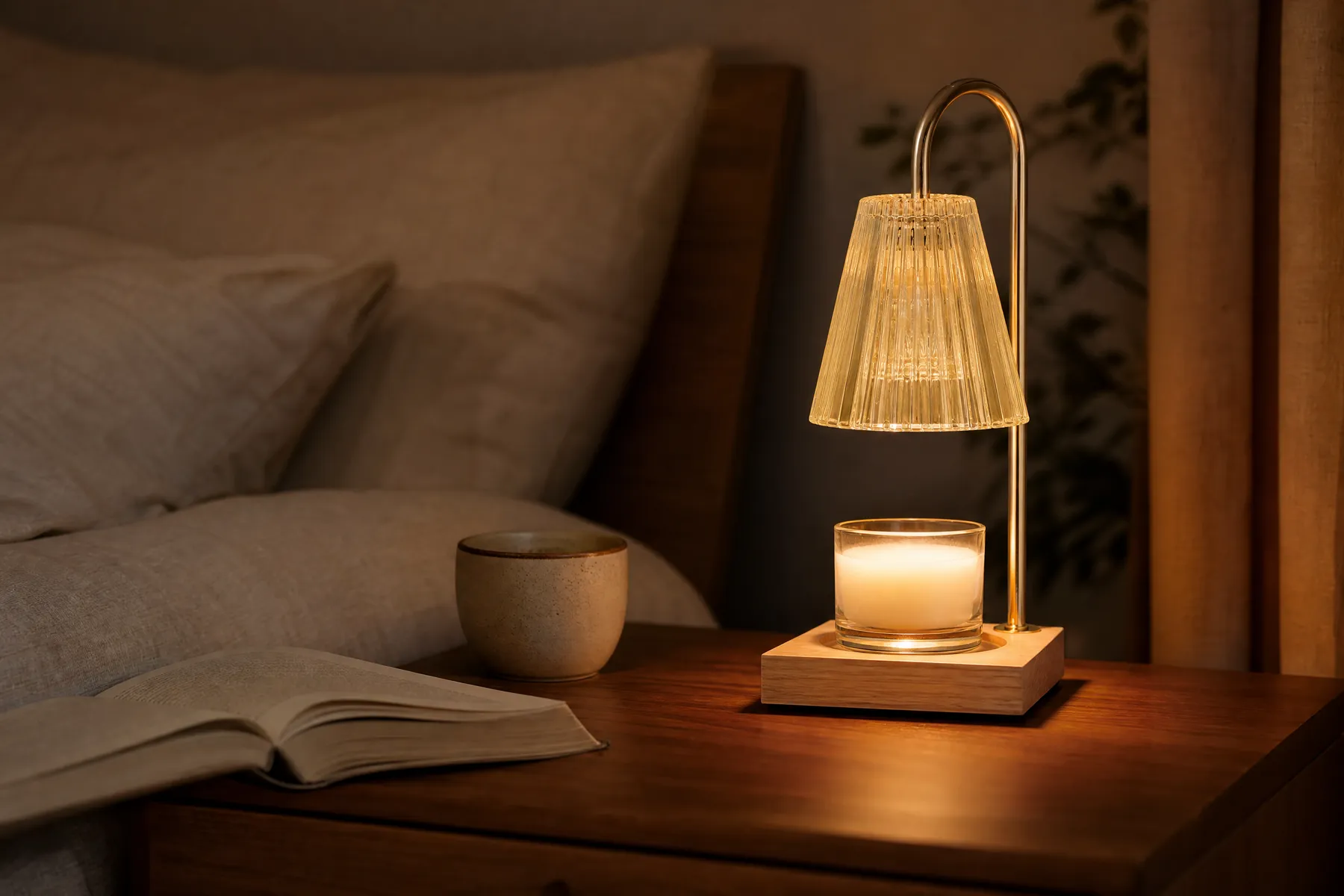
Short answer: yes, if you burn scented candles often. A candle warmer lamp costs about $50 to $60 once and uses a little under 1 cent of electricity an hour. Because the bulb melts the wax instead of burning it, your candle stops disappearing as fuel. If warming makes each candle last even 25% longer, a one candle a month habit pays for the lamp in about a year, and much faster if it lasts longer. If you only light a candle a few times a year, or the flame is the part you love, it probably is not worth it.
Full disclosure: we sell these lamps. So instead of asking you to take our word for it, here are the numbers so you can check them yourself: what a candle really costs you per hour, where the money quietly leaks out, what the lamp costs to run, and the cases where a warmer is honestly a waste.
What you are really paying for when you burn a candle
When you buy a scented candle you are paying for the fragrance. But once it is lit, the wax is fuel. The flame eats it, and the “burn time” on the label is really a countdown. Here is what that works out to for two popular candles:
| Candle | Typical price | Labeled burn time | Cost per hour of burning |
|---|---|---|---|
| Bath & Body Works three wick, 14.5 oz | say you pay $30 | 25 to 45 hours | 67 cents to $1.20 |
| Yankee Candle Original Large Jar, 22 oz | $17.49 on sale to $34.99 regular | 110 to 150 hours | 12 to 32 cents |
Prices change with sales, so plug in what you actually pay. Either way, a three wick candle is the expensive habit here. At up to $1.20 an hour, a few cozy evenings a week adds up quickly.
Where the money leaks out: tunneling, soot and the last half inch
Burning a candle does not use all the wax you paid for. Three things eat into it.
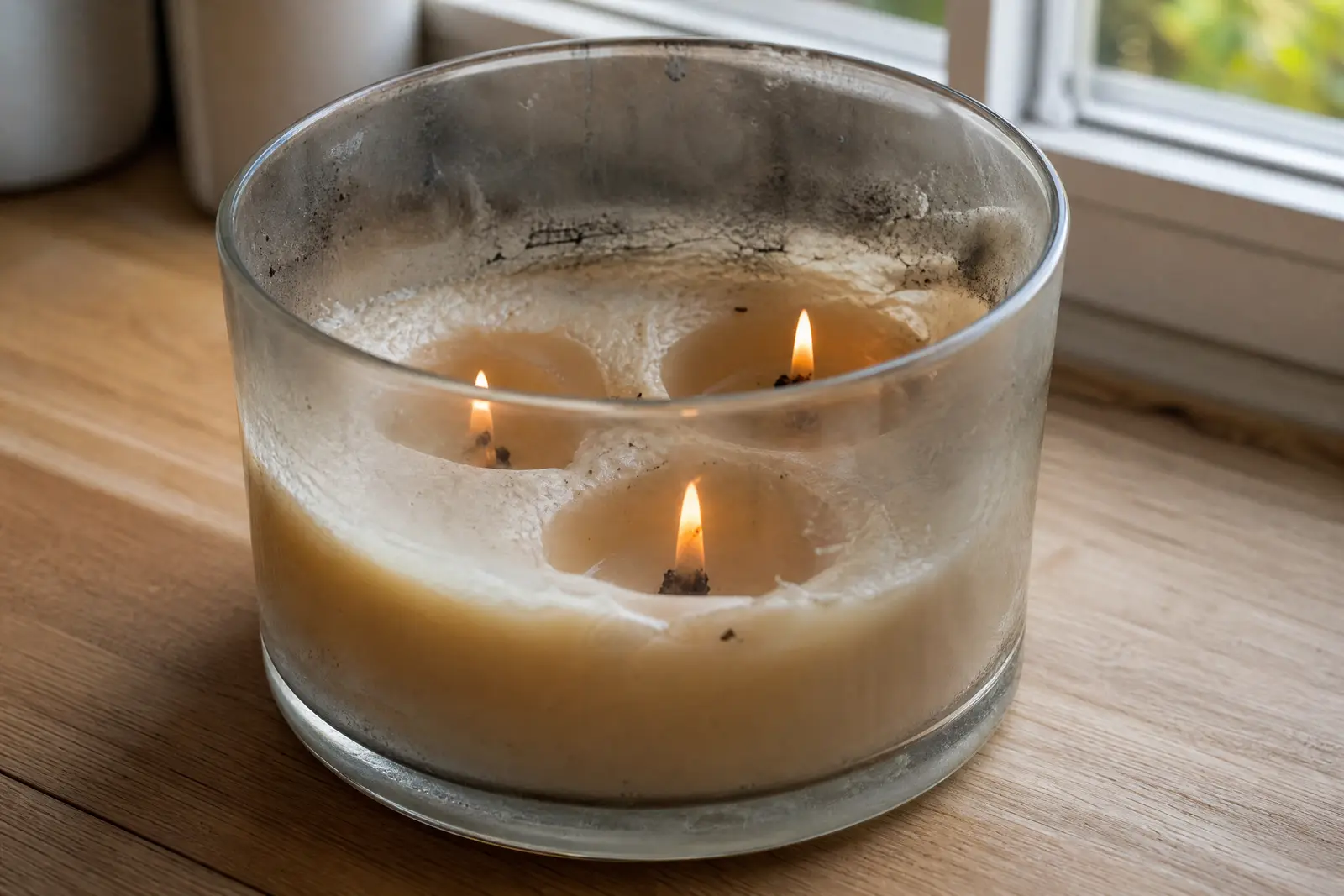
Tunneling. If a candle is not burned long enough for the melt pool to reach the edge of the jar, the flame digs a hole straight down. The ring of wax left on the walls never melts again, and that wax still has fragrance in it.
The last half inch. The National Candle Association advises putting out a container candle when about half an inch of wax is left, because the glass can overheat and crack. That is good advice, but it means the bottom of every jar goes in the trash. If your candle has 3 inches of wax, half an inch is about a sixth of what you paid for.
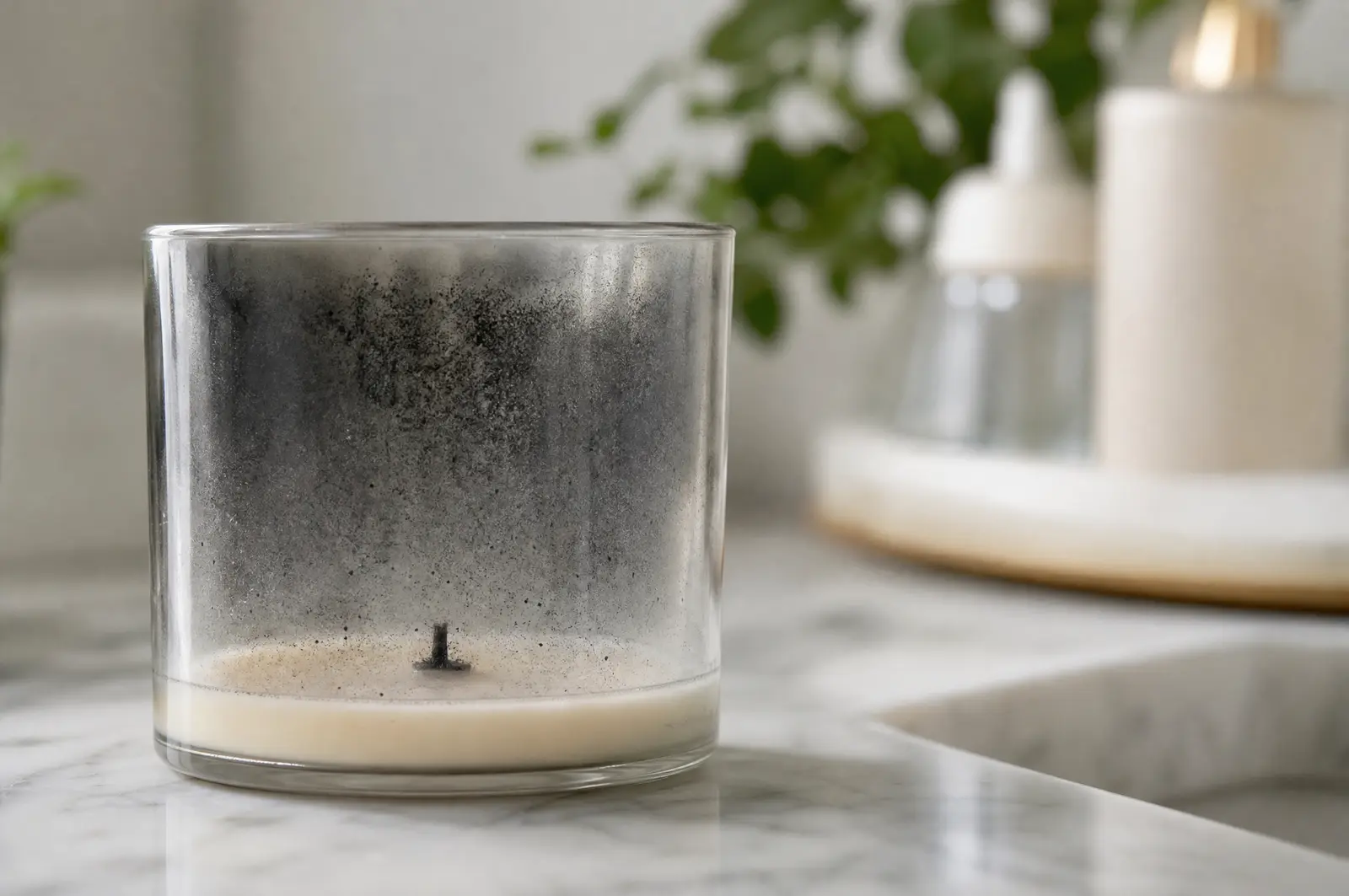
Soot. A flame that is too tall or a wick that is too long leaves black soot on the glass, and some of the scent you smell is smoke, not perfume.
How a warmer lamp changes the math
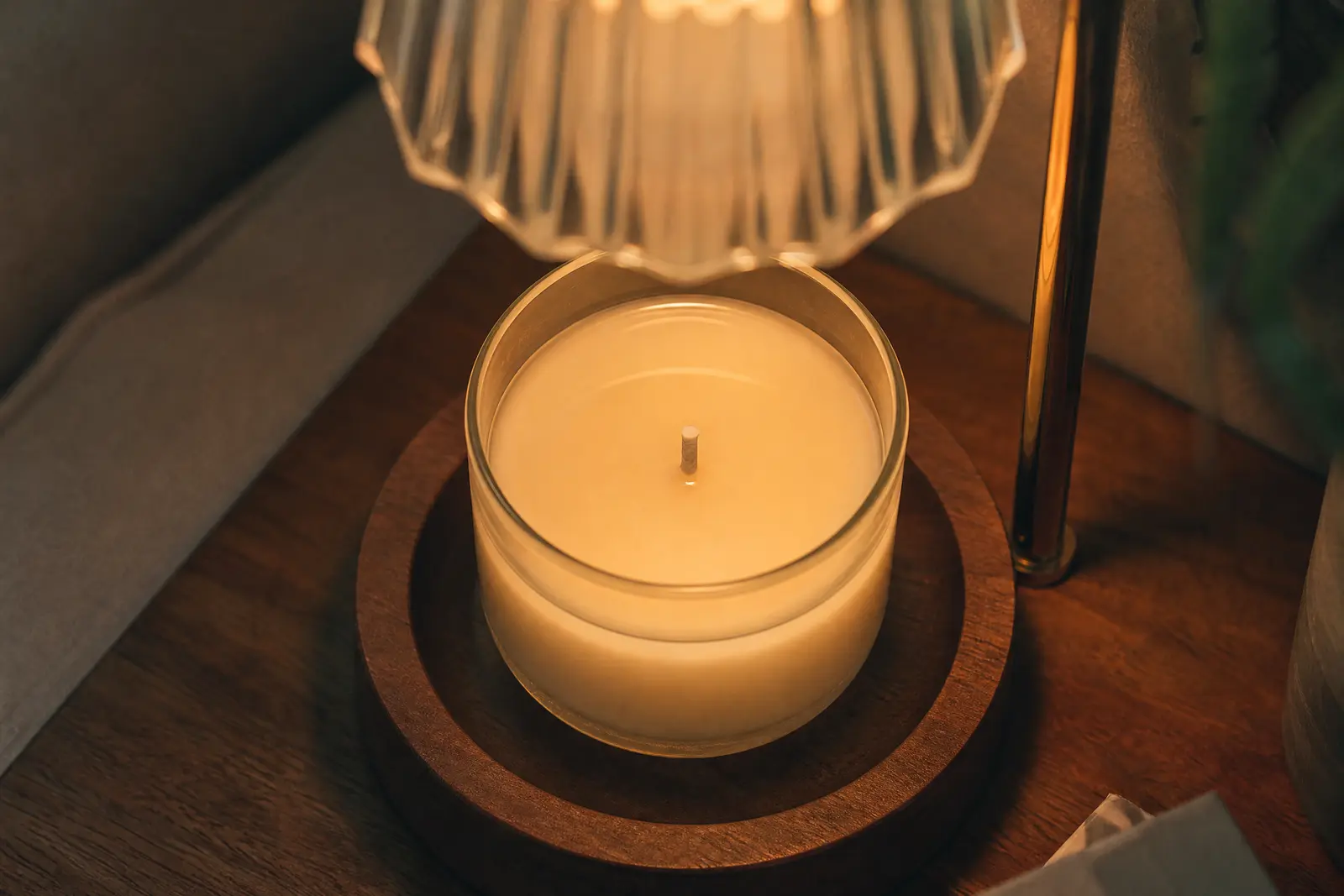
A candle warmer lamp is a small lamp with a warm halogen bulb that sits a few inches above your jar. The heat from the bulb melts the top of the candle into a pool, and the fragrance rises from that pool exactly like it does from a lit candle. The difference is that nothing is burning, so the wax is not being used up as fuel.
- The melt pool spreads across the whole surface, so wax stuck to the sides melts too and tunneling stops.
- There is no flame, so there is no soot on the glass and no smoky note in the scent.
- As the wax level drops, you lower the shade and keep using the candle well past the point where you would have had to stop burning it.
A candle maker interviewed by Real Homes says warming melts the wax slowly, which often gives a longer lasting fragrance than burning. Apartment Therapy writer Natalia Vela wrote that a scent that used to last her a month now stretches over two and a half months on a warmer.
To be fair: nobody has published a lab test that measures exactly how much longer the scent lasts, and the answer depends on the candle. The wax does not run out, but the fragrance in it eventually does. When a warmed candle smells faint even with a full melt pool, it is time for a new one.
What a candle warmer lamp costs to run
A typical candle warmer lamp uses a 50 watt GU10 halogen bulb, which is the wattage listed on several of our lamps. The U.S. Energy Information Administration puts the average home electricity price at 18.31 cents per kWh (July 2026). Here is the math at full brightness:
| How you use it | Electricity | Cost |
|---|---|---|
| 1 hour | 0.05 kWh | just under 1 cent |
| 3 hours every night for a month | 4.5 kWh | about 82 cents |
| 3 hours every night for a year | 55 kWh | about $10 |
Dimming the lamp uses less than this. In other words, a year of nightly use costs about a third of one $30 candle.
Does it pay for itself? A one candle a month example
Say you go through one $30 candle a month. That is $360 a year. Here is what happens if warming stretches each candle by different amounts. The lamp cost is rounded up to about $67 to stay on the safe side. For electricity, we assume you warm your candles for as many hours as you used to burn them: about 35 hours per candle, or 420 hours a year, which is roughly $4.
| If each candle lasts | Candles per year | Yearly candle spend | Saved per year | Lamp paid back in |
|---|---|---|---|---|
| 25% longer | 9.6 | $288 | $72 | about 12 months |
| 50% longer | 8 | $240 | $120 | about 7 months |
| Twice as long | 6 | $180 | $180 | about 5 months |
Even the cautious row pays the lamp back in about a year, and the lamp keeps working after that. This also does not count the wax you stop throwing away from tunneling and the last half inch.
When a candle warmer lamp is not worth it
- You rarely light candles. If one candle lasts you a season, the savings will be too small to matter, and you should buy a lamp only if you like how it looks.
- You love the flame. A warmer gives a steady warm glow, not a flicker. If the flame is the whole point for you, nothing replaces it.
- You want to scent a huge open space. Warmers tend to do best in rooms like bedrooms, bathrooms and offices. A big open floor plan may not smell as strong as it does with a lit candle.
- Your candles do not fit. Very tall or very wide jars may not fit under some lamps. Measure your jar and check the lamp’s maximum height first.
How to get the most value from a warmer lamp
- Choose a lamp that fits your candles. A height adjustable lamp works with small jars and large three wick candles alike.
- Start bright, then dim. Use a higher setting until the melt pool reaches the edges, then turn it down to keep the scent going gently.
- Use the timer. A few hours at a time is plenty, and the auto off timer means you never have to remember.
- Put the lid back on. Covering the candle when it cools helps keep the fragrance in the wax.
Candle warmer lamps worth a look
Every one of these has an auto off timer and a dimmer, and all of them melt your candle without a flame.
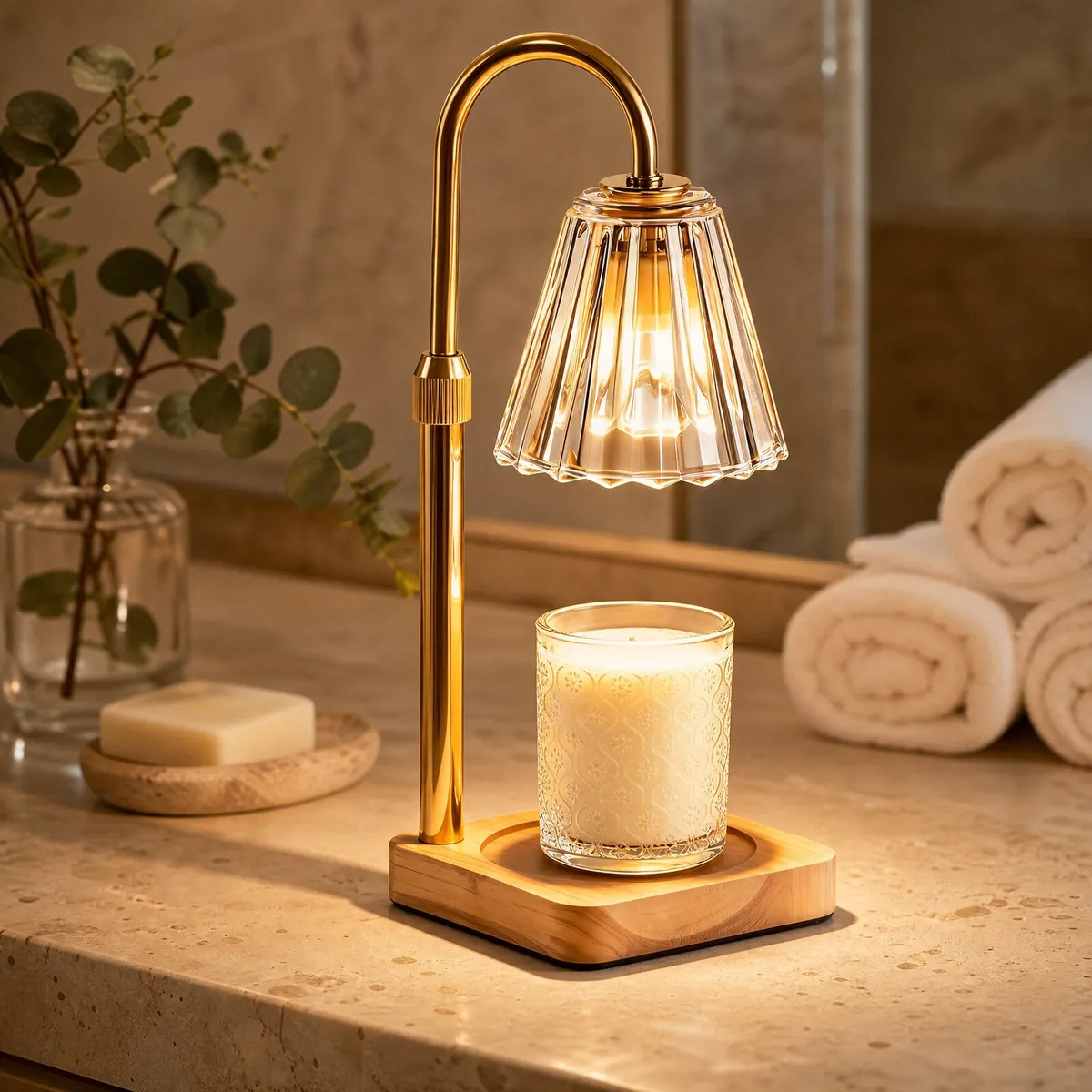 Adjustable Height Candle Warmer LampFrom $59.99Raises and lowers to fit small jars, three wick candles and large 22 oz jars. 4 level dimmer, 2, 4 or 8 hour timer, 2 bulbs included.See this lamp
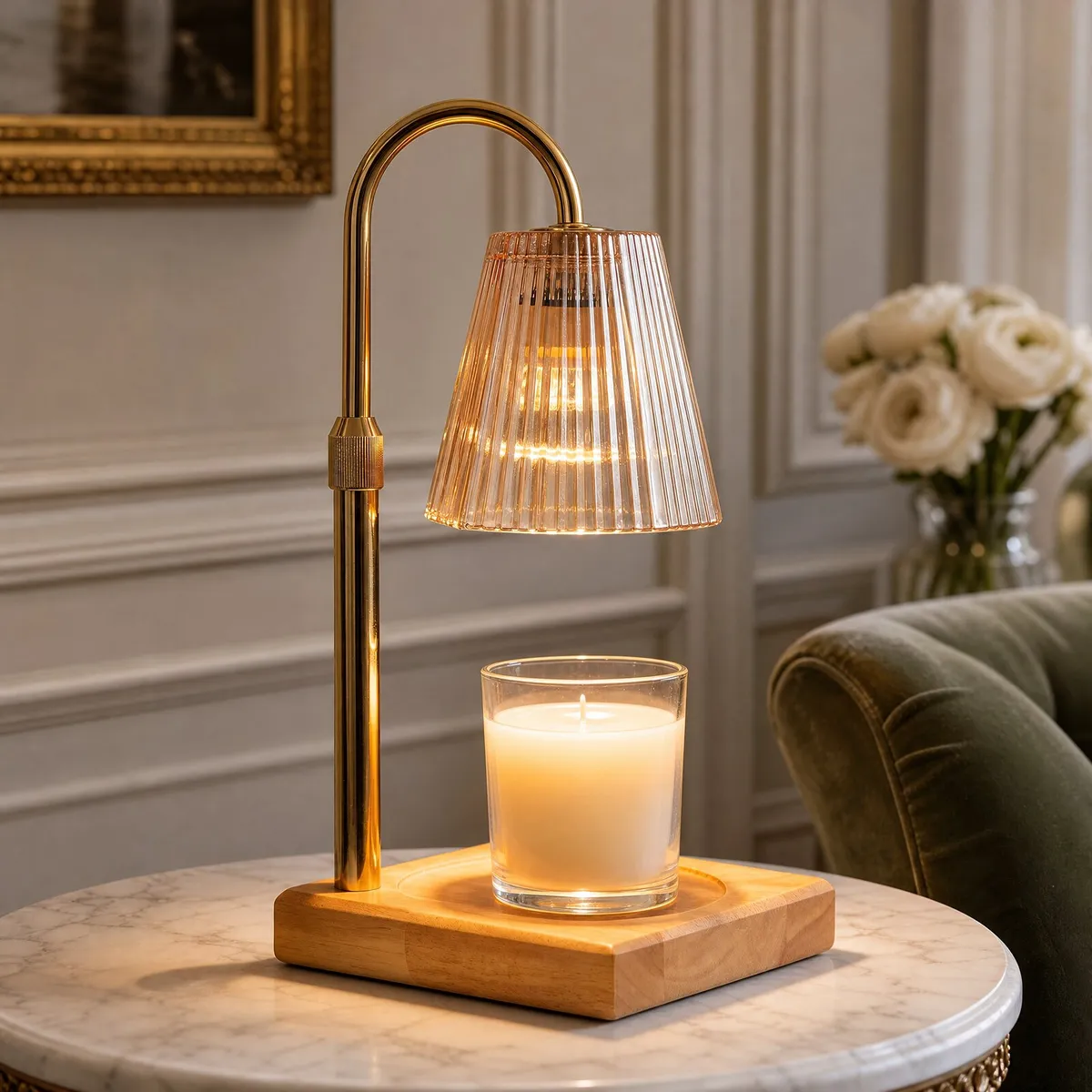 Champagne Pleated Glass Candle Warmer LampFrom $59.99Has a 24 hour cycle timer, so it switches on and off at the same time every day. Height adjustable, 2 bulbs included.See this lamp
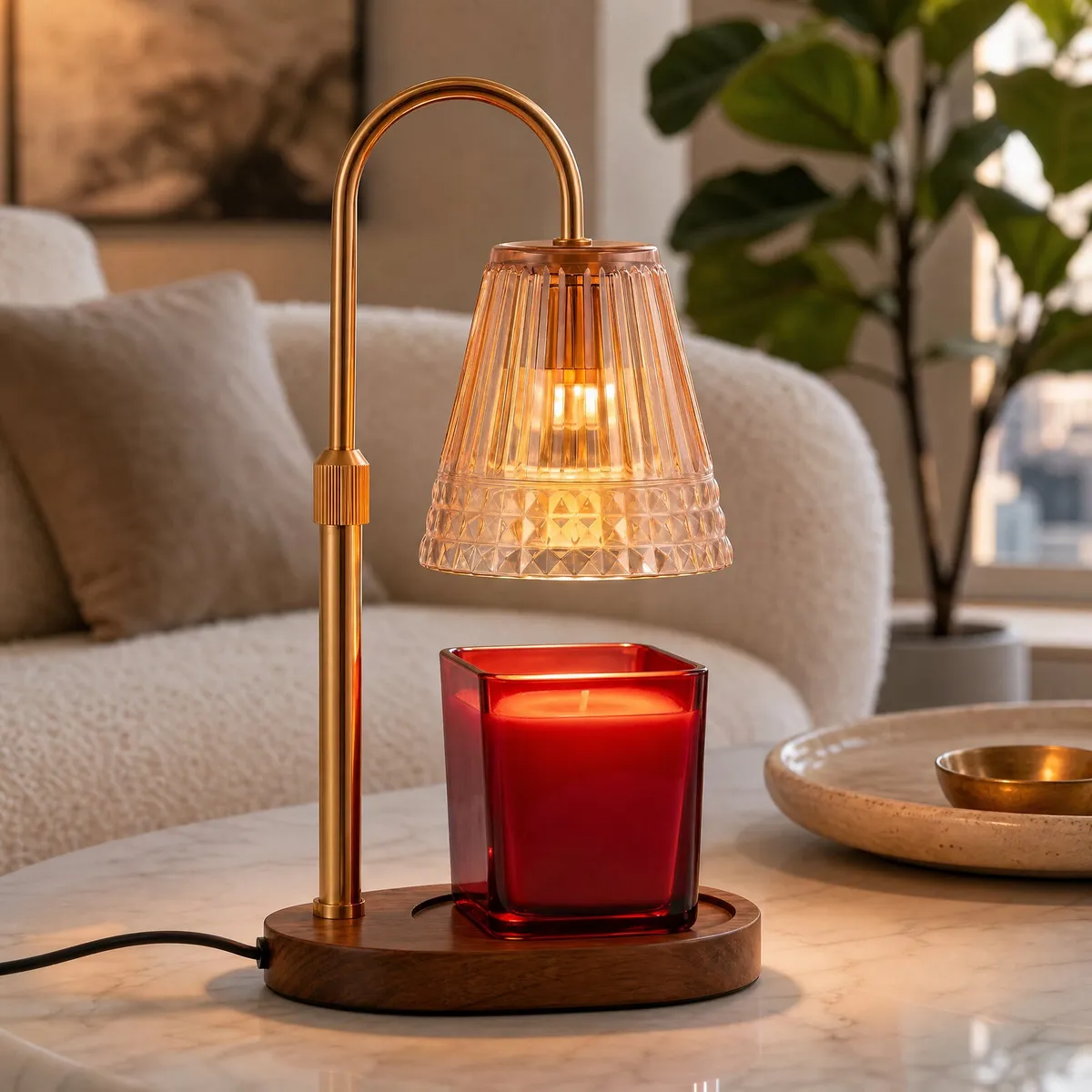 Faceted Glass Candle Warmer Lamp, Walnut BaseFrom $49.99Stepless dimmer from 25% to 100% and a shade that moves from 2.25 to 6 inches above the base, from small tins up to large three wick jars.See this lamp
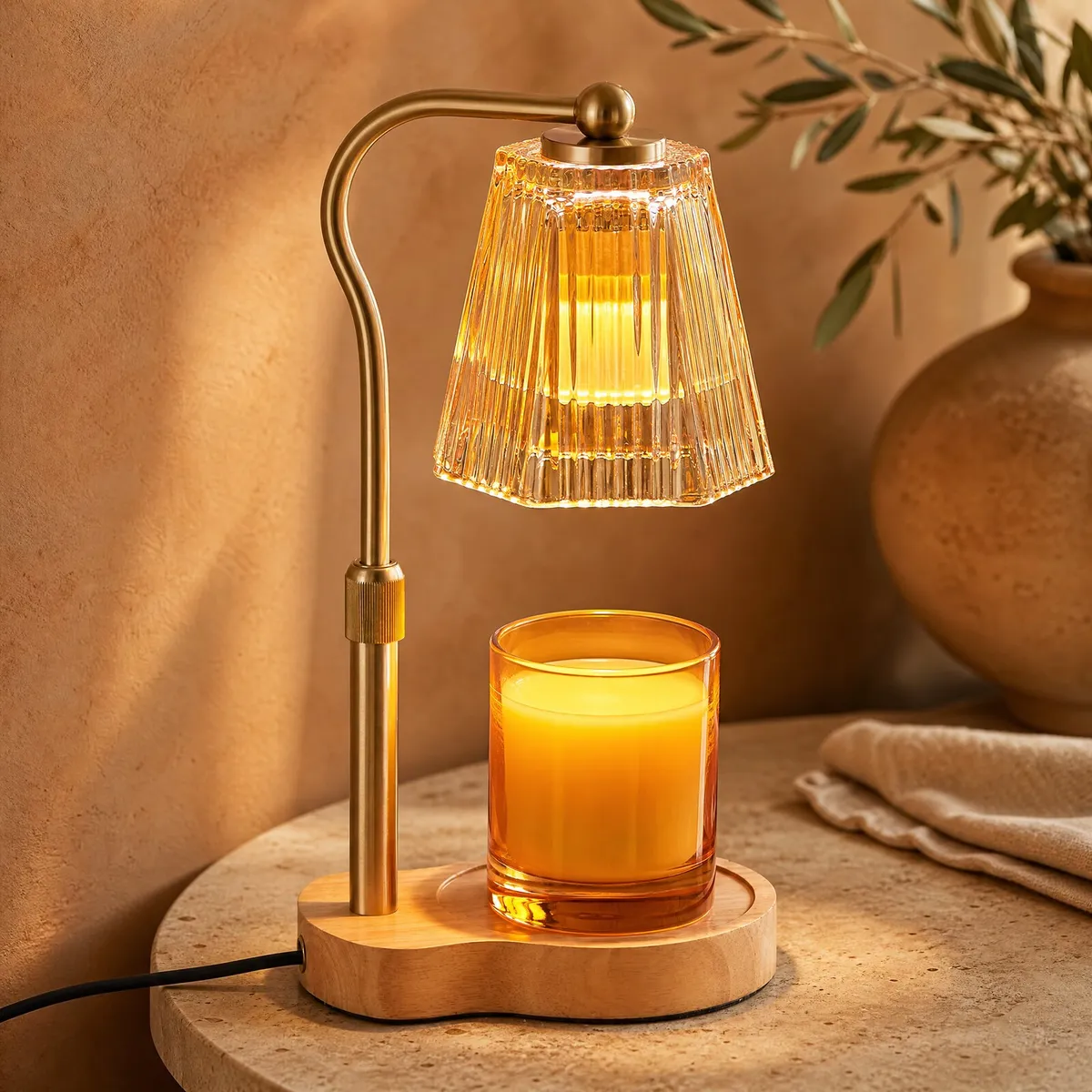 Fluted Glass Candle Warmer LampFrom $49.99A compact lamp for jars up to 6 inches tall. Dimmable, 2, 4 or 8 hour timer, 2 bulbs included.See this lamp
Ready to stop burning through candles? Every lamp we sell has a built in auto off timer. You have 14 days to return it if it is not right for you.
Shop all candle warmer lampsFrequently asked questions
Does a candle warmer lamp use a lot of electricity?
No. A typical candle warmer lamp uses a 50 watt GU10 halogen bulb, the wattage listed on several of our lamps. At the July 2026 U.S. average home electricity price of 18.31 cents per kWh, that is a little under 1 cent per hour at full brightness, or about 82 cents for a month of 3 hours every night. Dimming it uses less.
Do candle warmers make candles last longer?
Yes, in the sense that the wax is not burned as fuel, so it does not disappear the way it does under a flame. Candle makers say the fragrance also tends to last longer because the wax melts slowly. How much longer depends on the candle; nobody has published a lab measurement, so treat any exact multiple as a rough guide.
Is it cheaper to use a candle warmer than to burn a candle?
If you go through scented candles regularly, usually yes. The lamp is a one time cost of about $50 to $60 and electricity is around a cent an hour. If warming stretches each candle by 50%, someone who buys one $30 candle a month saves about $120 a year.
Can I use a candle warmer on any candle?
It works with most jar candles, including three wick candles, as long as the jar fits under the shade with some space between the bulb and the wax. Check the lamp’s maximum jar height before you buy. Height adjustable lamps fit the widest range of sizes.
How long should I run a candle warmer at a time?
A few hours is plenty. Once the top of the candle has melted into a full pool, the scent is at its strongest. Use the built in auto off timer so the lamp switches itself off, and never leave it running while you are away from home.
Sources
- U.S. Energy Information Administration, Electric Power Monthly, Table 5.6.A (average residential price, July 2026)
- Safety+Health Magazine, candle safety tips from the National Candle Association
- Real Homes, What is a candle warmer? (interviews with candle makers)
- Apartment Therapy, Natalia Vela, The $24 Candle Warmer That Made Me Ditch Burning Candles for Good (December 2025)
- Yankee Candle, Original Jar Candles prices on yankeecandle.com (checked October 15, 2026)
- Walmart listings for Bath & Body Works 14.5 oz three wick candles (25 to 45 hour burn time)
Prices and burn times are taken from retailer listings and change often. Electricity math: watts / 1000 x hours x price per kWh.