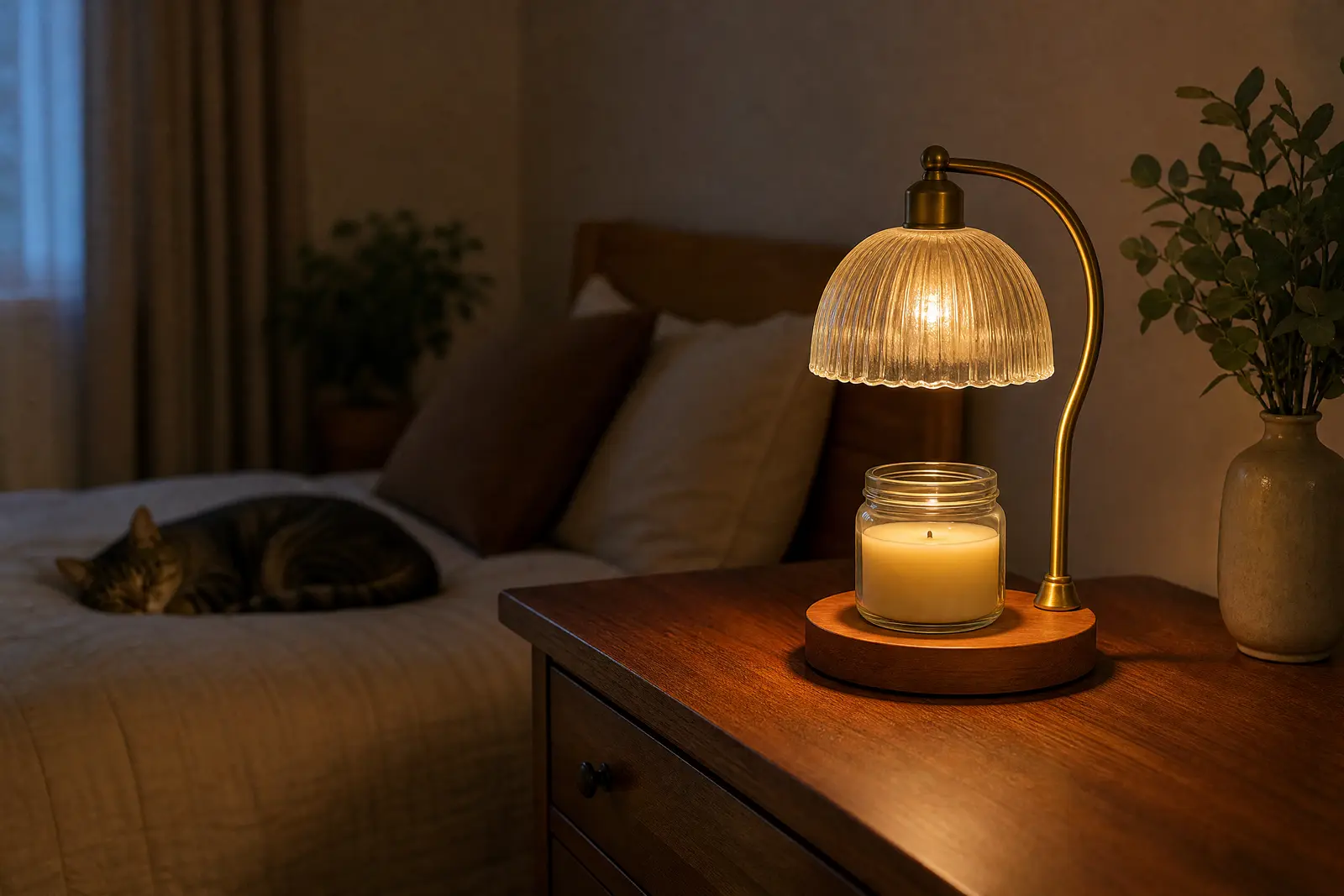
Short answer: yes, in the way that matters most. Candle fires mostly start when a flame meets something that can burn, and a candle warmer lamp has no flame. It is not risk free, though. The bulb, shade and jar get hot, it is an electrical appliance, and the candle still releases fragrance. Put it on a stable surface, out of reach of kids and pets, use the auto off timer, and switch it off when you leave home.
We sell candle warmer lamps, and it would be easy to call them perfectly safe. Nothing that gets hot is perfectly safe. So here is the honest version, with what fire safety experts actually say and sources at the bottom.
How candles start fires
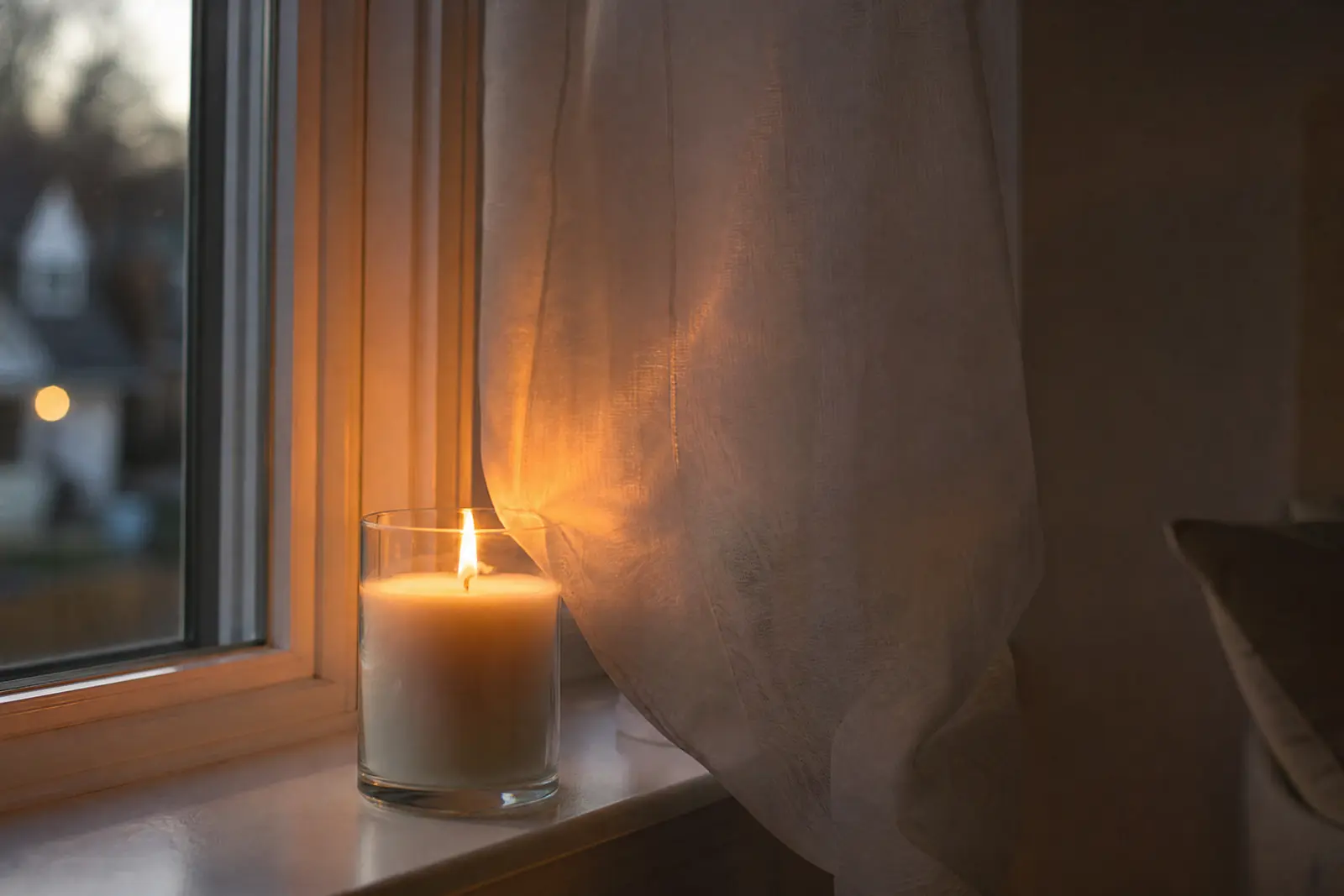
Candles are not a small risk. Richard Corsi, dean of engineering at UC Davis, told National Geographic that candles cause more than 7,000 home fires a year in the United States, and that he sees fire as a bigger concern than candle emissions.
National Fire Protection Association figures, as reported by the Green Bay Fire Department, show the pattern: more than half of home candle fires start when something flammable like decor is too close to the flame, roughly a third start in bedrooms, and sleep is a factor in about one in ten. That is why the National Candle Association says to put candles out before you leave a room or go to sleep.
What a warmer takes away, and what it does not
| Risk | Lit candle | Candle warmer lamp |
|---|---|---|
| Open flame | Yes | No |
| Curtains or decor catching fire | The most common cause of candle fires | No flame to catch, but keep the hot shade clear of fabric and decor |
| Falling asleep with it on | A known factor in candle fires | An auto off timer switches it off for you |
| A pet brushing past | A tail or whiskers can catch the flame | No flame, but the shade and jar are hot and the lamp can be knocked over |
| Soot and smoke | Yes | No |
| Hot surfaces | The jar and melted wax | The bulb, shade, jar and melted wax |
| Electrical parts | None | Cord, plug, switch and bulb |
| Fragrance in the air | Yes | Yes |
Tim Sendelbach, fire chief at Loveland Fire Rescue Authority, put it simply to NBC Select: “The use of candle warmers reduces the open flame risk.” He added that the controlled heat settings make an accidental fire less likely, but that a warmer can still be a hazard if it is left on unattended or placed too close to combustible decor or upholstery.
The risks a warmer still has
Heat. The bulb that melts your candle is hot, and so are the shade, the jar and the melted wax. Let everything cool before you touch the shade or move the candle.
Running it while nobody is home. Home site Hunker points out that even without a flame there are good reasons not to leave a warmer running unattended or for very long stretches: overheating, a damaged cord, a cord someone can trip on, and spills near the plug.
It is an electrical appliance. Like any small appliance, warmers can have defects. In 2008 the U.S. Consumer Product Safety Commission announced a recall of about 730,000 Candlsense candle warmers, a plate style warmer, because the heating element could come loose and scorch the surface underneath. Buy from a seller that tells you the bulb type and wattage and includes instructions, and stop using any warmer with a damaged cord or a loose part.
Fragrance. A warmer removes smoke and soot, not the scent itself. We covered what a 2025 Purdue University study found about warmed fragrance in Candle Warmer vs Burning a Candle: Which Smells Better?
Kids and pets
Susan McKelvey, communications manager at the National Fire Protection Association, told NBC Select to use a candle warmer only where children or pets cannot reach it or knock it over, and to skip unstable spots like the edge of a nightstand.
For pets, the big win is that there is no flame for a tail or whiskers to catch. The scent is a separate question. Dr. Murl Bailey, a professor at the Texas A&M College of Veterinary Medicine, has warned that some essential oils can be toxic to cats and that inhaled oils can irritate their airways. His advice is to check with your veterinarian before adding new scented products to your home, and to move a cat to fresh air and call a vet if it seems distressed. Leaving a door open so a pet can walk away from the scent is an easy habit too.
A simple safety checklist
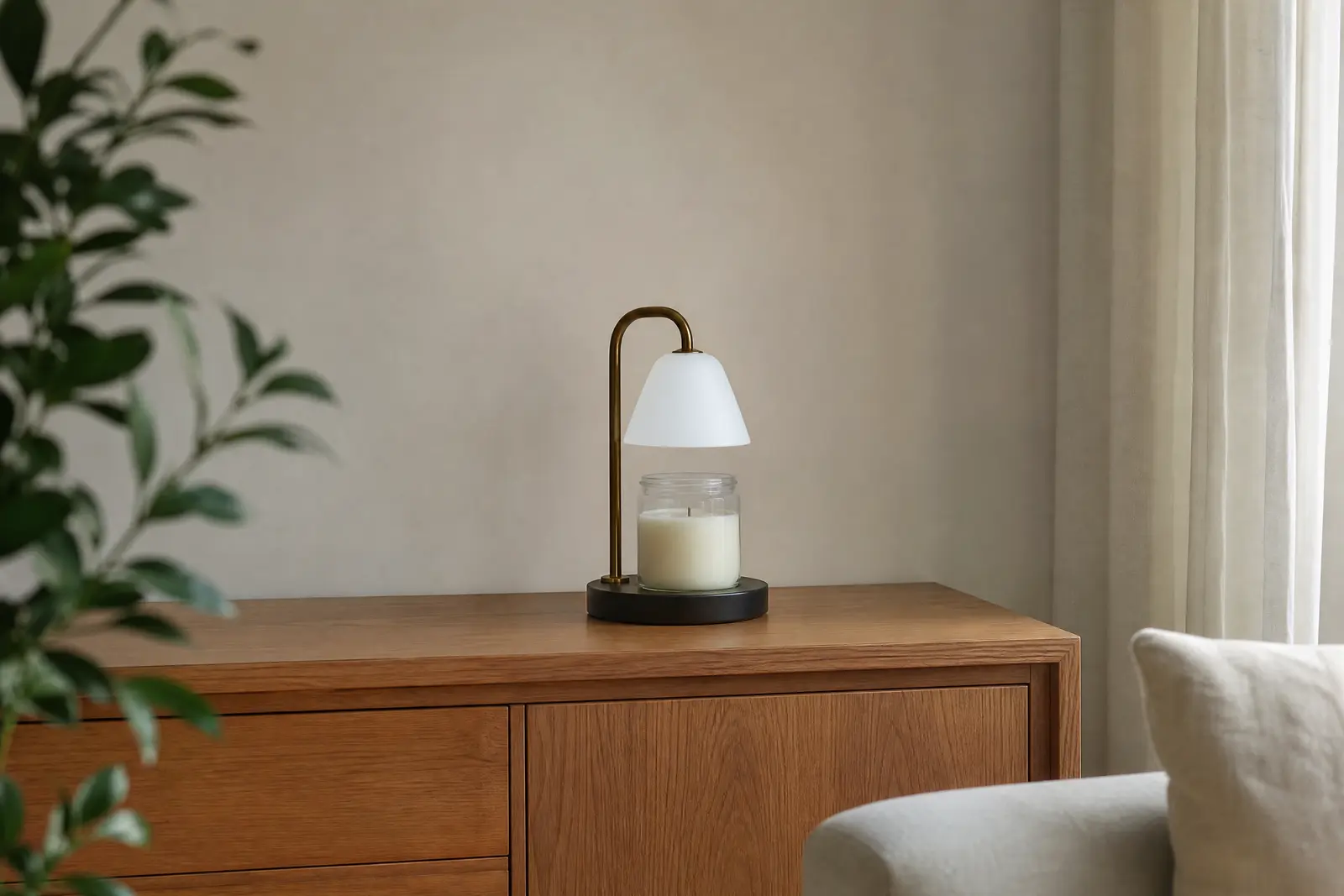
- Put the lamp on a flat, stable surface, away from the edge.
- Keep curtains, shelves, paper and decor away from the shade.
- Set the auto off timer every time, even if you plan to stay in the room.
- Switch it off when you leave home.
- Never light the candle while it is under the lamp. NBC Select notes that a warmer and a lit candle together only add to the risk.
- Use the bulb type and wattage listed for your lamp.
- Let the shade and jar cool before you touch them or swap candles.
- Keep the cord where nobody will trip on it, and away from water.
So, is a candle warmer the safer choice?
For most homes, yes. Taking the flame away removes the most common way candles start fires, and a timer covers the moment you forget or fall asleep. It makes the biggest difference in homes with curious pets or small children, in bedrooms, and anywhere open flames are not allowed. It is still a hot appliance, so the checklist above matters.
Curious about the other trade offs? See Is a Candle Warmer Lamp Worth It? and Does a Candle Warmer Make Candles Last Longer?
Lamps with an auto off timer
Every lamp we sell has a built in auto off timer. Here are a few to start with.
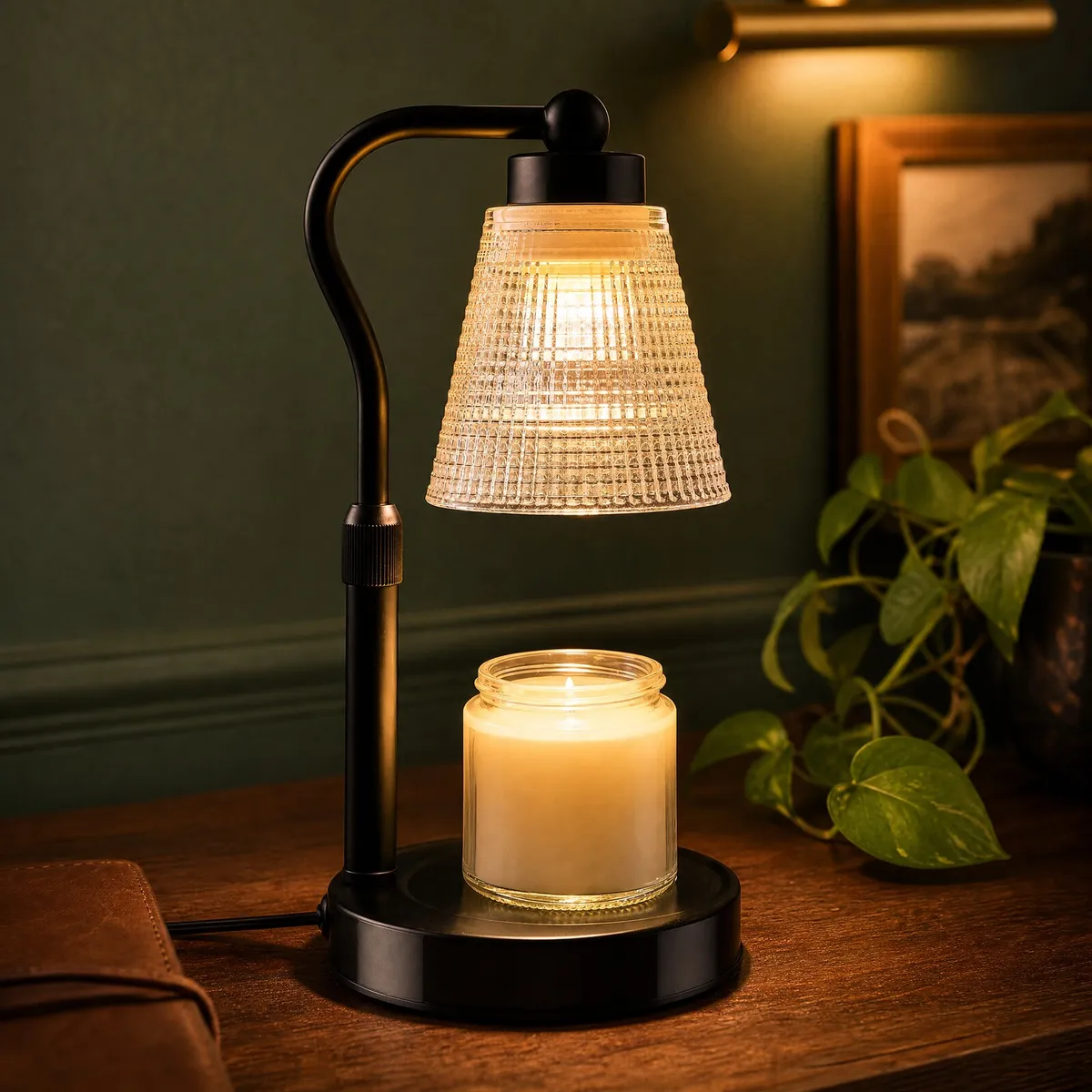 Grid Glass Crook Candle Warmer LampFrom $59.99A 2, 4 or 8 hour auto off timer, 3 brightness levels and a sliding arm for candles up to 5.9 inches tall.See this lamp
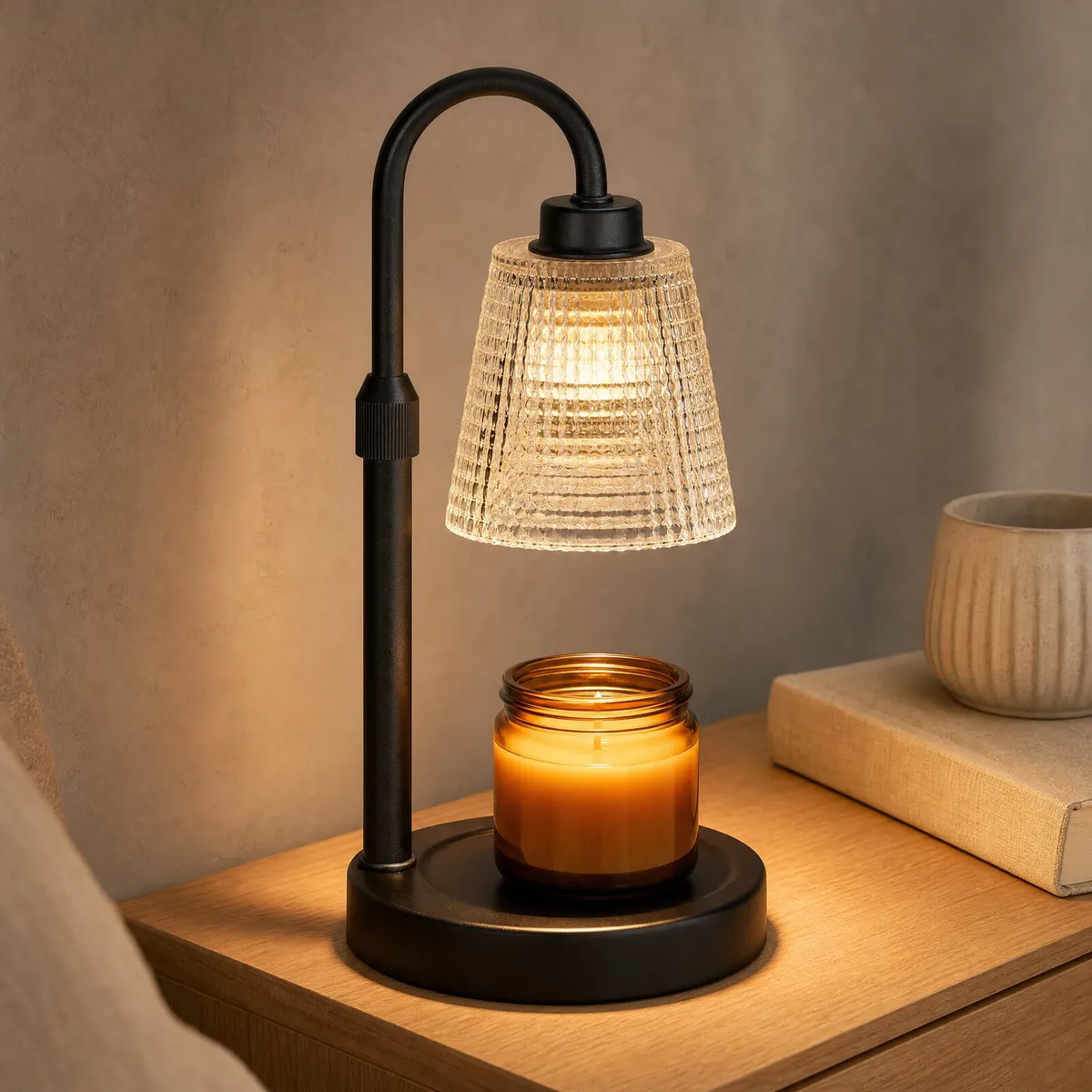 Arc Candle Warmer Lamp, Textured GlassFrom $54.994 brightness levels, an auto off timer and a twist to adjust arm that fits almost any jar. 2 bulbs included.See this lamp
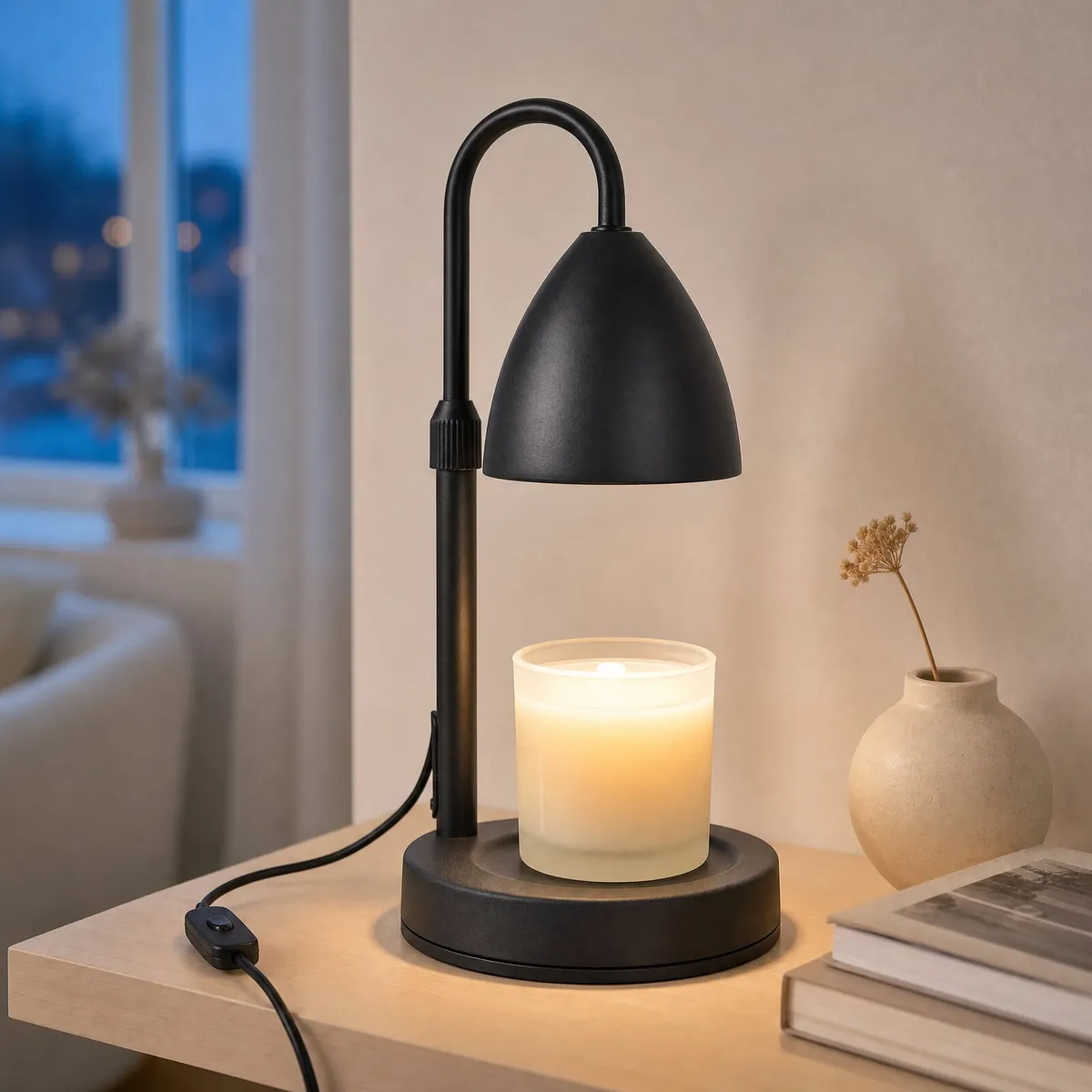 Hook Arm Candle Warmer LampFrom $54.99Dimmable with a timer, and a shade that adjusts from 3.2 to 6.5 inches above the base on the dome style. 2 bulbs included.See this lamp
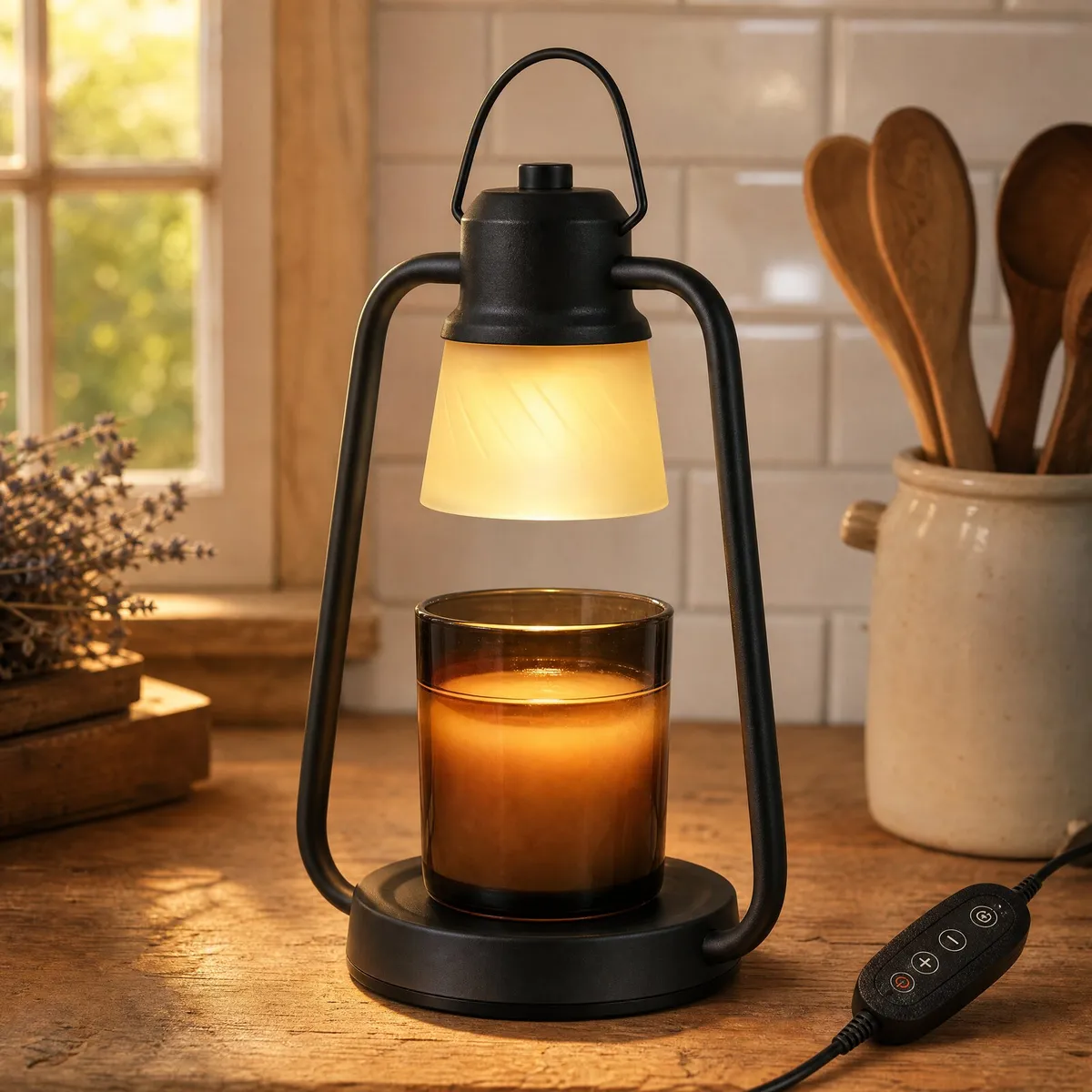 Farmhouse Black Candle Warmer LampFrom $49.99A dimmer plus a 2, 4 or 8 hour auto off timer, with a lantern or arched glass shade.See this lamp
Ready to try it with your own candles? Every lamp we sell has a built in auto off timer, and you have 14 days to return it if it is not right for you.
Shop all candle warmer lampsFrequently asked questions
Is a candle warmer safer than a candle?
In the way that matters most, yes. There is no open flame, and fire safety experts point to flames near things that can burn as the leading cause of candle fires. A warmer still gets hot and is an electrical appliance, so it needs the same common sense as any lamp.
Can I leave a candle warmer on overnight?
Use the auto off timer instead of leaving it running. Set it for the time you will be reading or winding down, and let it switch itself off. Do not leave it on while you are away from home.
Can a candle warmer start a fire?
It is much less likely than a lit candle, but any heat source can cause trouble if it is placed against curtains or decor, knocked over, or used with a damaged cord. Keep the shade clear of anything that can burn and put the lamp on a stable surface.
Are candle warmers safe around cats and dogs?
There is no flame for a tail or whiskers to catch, which is a real improvement. Keep the lamp where pets cannot reach it or knock it over, since the shade and jar get hot. Fragrance is a separate question: if your pet has breathing problems, ask your vet before using any scented product.
Should I light my candle while it is on the warmer?
No. Use one or the other. A lit candle under a warm lamp combines two sources of heat and adds risk without adding anything you need.
Sources
- National Geographic, Terry Ward, Scented candles may be cozy, but are they polluting your home’s air? (September 2023)
- City of Green Bay Fire Department, Candles (NFPA candle fire figures and safety tips)
- NBC Select, Cory Fernandez, top rated candle warmers (with fire chief Tim Sendelbach and NFPA’s Susan McKelvey)
- Hunker, Are candle warmers safe to leave on all day?
- U.S. Consumer Product Safety Commission, Electric candle warmers recalled by Provo Craft & Novelty due to fire hazard
- Texas A&M College of Veterinary Medicine, A Scent sitive Subject: Essential Oil Diffusers and Your Cat (November 2019)
- Safety+Health Magazine, candle safety tips from the National Candle Association